From the cheerful Pansy to the romantic Peony, flowers that start with p offer a stunning variety of colors, shapes, and scents. Whether you’re a seasoned gardener planning your next flower bed, a floral designer searching for bouquet inspiration, or simply a nature lover curious about the world around you, understanding these botanical treasures can bring immense satisfaction. Knowing their names, growing needs, and symbolic meanings unlocks a deeper appreciation for their beauty.
This guide explores the world of ‘P’ flowers, from popular garden staples to unique, exotic blossoms. We will cover their distinct characteristics, ideal growing conditions, and rich symbolism. You’ll gain practical tips for choosing, planting, and caring for these flowers, helping you create a vibrant garden, design breathtaking arrangements, or simply identify these beauties on your next walk. Get ready to discover the perfect P-flower to add a touch of personality to your green space.
The Most Popular Flowers that Start with P
These five flowers are garden favorites, known for their reliable blooms and widespread appeal. They are often the first choice for gardeners looking to add color and charm to their landscape.
Pansy (Viola tricolor var. hortensis)
Pansies are beloved for their vibrant, face-like petals that come in a kaleidoscope of colors, from deep purples and blues to bright yellows and whites. Many varieties feature distinctive dark blotches in the center, resembling a cheerful expression. These cool-season annuals are compact, making them perfect for borders, containers, and window boxes.
For the best results, plant Pansies in rich, well-draining soil in a location that receives full to partial sun. They thrive in cooler temperatures and may wilt in the intense heat of mid-summer. Regular watering is essential to keep the soil consistently moist. Symbolically, the Pansy represents thought, remembrance, and love, deriving its name from the French word “pensée,” which means “thought.”
Peony (Paeonia)
Known for their large, lush, and fragrant blooms, Peonies are a symbol of romance, prosperity, and good fortune. They come in three main types: herbaceous, which die back to the ground in winter; tree peonies, which have woody stems; and Itoh (or intersectional) peonies, a hybrid of the two. Their flowers range from simple, single-petaled forms to complex, multi-layered bomb types in shades of pink, white, red, and yellow.
Peonies thrive in full sun and well-drained, slightly alkaline soil. When planting, ensure the “eyes” (small reddish buds on the root) are no more than two inches below the soil surface, as planting too deeply can prevent them from flowering. These long-lived perennials require minimal care once established but benefit from good air circulation to prevent fungal diseases.
Petunia (Petunia × atkinsiana)
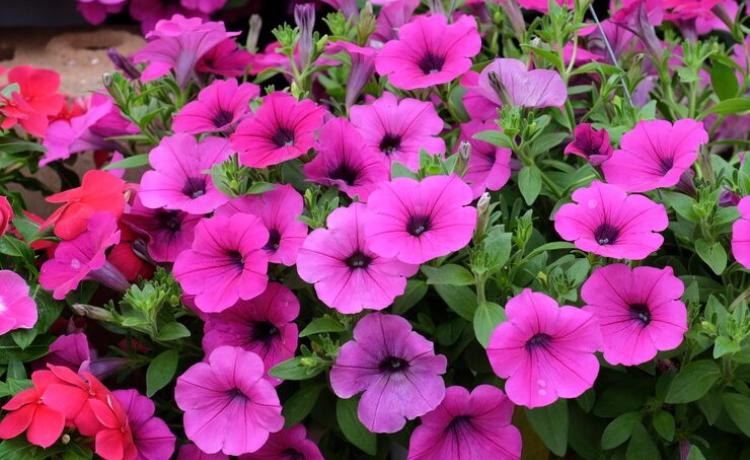
Petunias are powerhouse annuals, celebrated for their profuse, trumpet-shaped flowers that bloom from spring until the first frost. They are available in countless varieties, including Grandiflora (large blooms), Multiflora (smaller, more numerous blooms), and trailing types perfect for hanging baskets. Their color palette is vast, featuring nearly every shade imaginable, often with interesting patterns like stripes and veins.
To flourish, Petunias need at least six hours of direct sunlight per day and well-draining, fertile soil. They are heavy feeders, so applying a balanced liquid fertilizer every few weeks will encourage continuous blooming. While they are relatively drought-tolerant, consistent watering produces the best floral display. Petunias often symbolize being with someone you find soothing and peaceful.
Poppy (Papaver)
Poppies are known for their delicate, paper-like petals and striking colors, most famously brilliant red. There are many species, including the vibrant California Poppy (Eschscholzia californica), the iconic Flanders Poppy (Papaver rhoeas), and the large-flowered Oriental Poppy (Papaver orientale). Their blooms are often short-lived but appear in succession, providing a continuous splash of color.
Most poppies prefer full sun and well-drained soil; they are intolerant of wet, heavy clay. Many types are drought-tolerant once established and will self-seed readily, creating natural, meadow-like drifts in the garden. The Poppy is a powerful symbol of remembrance and peace, particularly in commonwealth countries where it is worn to honor fallen soldiers.
Primrose (Primula)
Primroses are charming perennials that signal the arrival of spring with their clusters of colorful flowers. The English Primrose (Primula vulgaris) is a classic woodland plant with pale yellow blooms, but hundreds of other species offer flowers in shades of pink, purple, red, and blue. They grow in low rosettes of textured leaves, with the flowers rising on short stems from the center.
These plants thrive in cool, shady locations with moist, humus-rich soil, mimicking their native woodland habitat. They are excellent for shady borders, rock gardens, or planting under deciduous trees. Symbolically, Primroses represent youth, new beginnings, and the inability to live without a loved one.
Lesser-Known Flowers That Start with P
Beyond the common favorites, a world of unique and fascinating P-flowers awaits discovery. These lesser-known gems can add an exotic or specialized touch to your garden.
Plumeria (Plumeria rubra)
Often associated with tropical islands like Hawaii, Plumeria (also known as Frangipani) is prized for its intensely fragrant, waxy flowers. The pinwheel-shaped blooms appear in clusters at the tips of branches and come in shades of white, yellow, pink, and red. In Hawaiian culture, Plumeria flowers are used to make leis and symbolize new life and positivity.
Plumeria requires a warm climate, full sun, and well-draining soil. It is drought-tolerant and susceptible to root rot if overwatered. In cooler regions, it can be grown in containers and brought indoors during the winter.
Passionflower (Passiflora)
Passionflower is an exotic-looking vine that produces some of the most intricate and unusual flowers in the plant kingdom. The complex blooms feature a ring of petals and sepals surmounted by a crown of colorful filaments. Many species produce edible fruits, known as passion fruit.
This vine thrives in full sun to partial shade and prefers moist, well-draining soil. It needs a sturdy structure like a trellis or fence to climb. In Christian symbolism, the flower’s parts are said to represent elements of the crucifixion, connecting it to spirituality and passion.
Phlox (Phlox paniculata)
Phlox is a versatile genus that includes low-growing groundcovers like Creeping Phlox and tall, upright varieties known as Garden Phlox. They are known for their large clusters of fragrant, star-shaped flowers that bloom in vibrant shades of pink, purple, white, and red, attracting butterflies and other pollinators.
Tall Garden Phlox prefers full sun and fertile, moist soil, while Creeping Phlox is more tolerant of drier conditions. Good air circulation is important to prevent powdery mildew, a common issue with this plant. Phlox symbolizes harmony, unity, and sweet dreams.
Periwinkle (Vinca)
Periwinkle is a resilient groundcover with glossy green leaves and delicate, pinwheel-shaped flowers in shades of blue, purple, or white. It is an excellent choice for covering bare ground in shady areas where other plants might struggle. Trailing varieties are also popular for hanging baskets and containers.
This plant is highly adaptable but performs best in partial to full shade with moist, well-draining soil. It is known for its vigorous growth and can become invasive if not managed. Periwinkle symbolizes everlasting love, friendship, and nostalgia.
Choose the Right P-Flower for Your Garden
Selecting the right plant involves more than just picking a pretty bloom. Consider your local climate, soil type, and the amount of available space. P-flowers that thrive in cool, shady conditions, like Primrose, will not survive in a hot, sunny spot better suited for Petunias. Pay attention to the plant’s mature size to ensure it fits your garden’s scale. For small gardens or balconies, compact options like Pansies or container-grown Petunias are excellent choices. Grouping plants with similar light and water needs will also make maintenance much easier.
How to Care for Your P-Flowers
Proper planting and care are crucial for healthy, beautiful flowers. Most P-flowers, including Peonies and Poppies, require well-draining soil to prevent root rot. Amending heavy clay soil with organic matter like compost can improve its structure. Watering needs vary; while Primrose prefers consistently moist soil, Plumeria is more drought-tolerant. A general rule is to water deeply but infrequently, allowing the top inch of soil to dry out between waterings. Be vigilant for common pests and diseases. For instance, Phlox is prone to powdery mildew, which can be minimized by ensuring good air circulation and watering at the base of the plant.
You would also like: “flowers starting with a“
Find Your Perfect Petal
The world of flowers that start with ‘P’ is rich with beauty, fragrance, and meaning. From the dependable charm of Petunias and Pansies to the exotic allure of Plumeria and Passionflower, there is a perfect P-flower for every garden and occasion. By understanding their unique needs and symbolism, you can cultivate not just a beautiful garden, but a space filled with personal significance.
We encourage you to explore these plants further. Visit a local nursery, observe them in a botanical garden, or take a chance on planting a new variety. The joy of watching a plant grow and flourish is one of gardening’s greatest rewards.
Frequently Asked Questions
What are the best flowers that start with P for shady gardens?
Primrose (Primula) and Periwinkle (Vinca) are excellent choices for shady areas. Primroses thrive in the cool, dappled light under trees and produce beautiful spring blooms. Periwinkle is a hardy groundcover that tolerates deep shade and provides glossy foliage with delicate flowers.
Which P-flower is best for a balcony garden?
Petunias and Pansies are ideal for balcony gardens. Both grow exceptionally well in containers and hanging baskets. Petunias offer a constant cascade of color throughout the summer, while Pansies provide cheerful blooms in the cooler months of spring and fall. Their compact size makes them easy to manage in small spaces.
Are P-flowers good for attracting pollinators?
Yes, many P-flowers are excellent for attracting pollinators. Phlox, with its fragrant flower clusters, is a magnet for butterflies. Poppies attract bees with their pollen-rich centers, and Petunias draw in hummingbirds and moths, especially the fragrant varieties. Planting these flowers helps support local ecosystems.
Can I grow peonies in containers?
While peonies perform best when planted in the ground, they can be grown in large containers. Choose a pot that is at least 5 gallons in size with excellent drainage. Use high-quality potting soil and ensure the container receives at least six hours of direct sunlight. Keep in mind that container-grown Peonies may require more frequent watering and winter protection in colder climates.
What does a poppy symbolize in weddings?
Though more commonly associated with remembrance, the Poppy can carry different meanings in a wedding context. In some cultures, its vibrant red color symbolizes love and passion. When used thoughtfully, it can represent a love that is both beautiful and resilient. Its delicate, ethereal appearance can also add a touch of whimsical, natural beauty to bridal bouquets and decor.