Finding mushrooms sprouting in your lawn can be puzzling. One day your grass is clear, and the next, a cluster of fungi has appeared overnight. This is a common sight for many homeowners, sparking questions about safety, lawn health, and what to do next. While some might worry about poisonous mushrooms, especially with pets and children around, others see them as a sign of a thriving ecosystem right under their feet. This guide will walk you through everything you need to know about lawn and mushrooms. We’ll explore why they appear, how to identify common types, and whether they pose a risk to your family or your lawn. You’ll also learn effective methods for removing them and preventing their return. By the end, you’ll understand the role these fungi play and how to manage them confidently, ensuring your lawn remains both healthy and safe.
Understanding Lawn and Mushrooms
Before you decide to remove them, it helps to understand what lawn mushrooms are and why they’re there in the first place.
What Are Lawn Mushrooms?
Lawn mushrooms are the visible, fruiting bodies of a much larger fungal network that lives underground. This network, made of thread-like structures called mycelium, is a natural and essential part of your lawn’s ecosystem. These fungi act as decomposers, breaking down dead organic material like old tree roots, buried wood, grass clippings, and leaves.
Through this decomposition process, fungi release valuable nutrients back into the soil, making them available for your grass and other plants to use. In this way, mushrooms are a key player in nutrient cycling, contributing directly to better soil health. The mushrooms you see are simply the reproductive part of the fungus, which appears when conditions are just right.
Types of Mushrooms Commonly Found in Lawns
Many different mushroom species can pop up in a lawn. While a formal identification requires a mycologist, you can learn to recognize a few common types.
Fairy Rings: These mushrooms appear in a circular or arc-shaped pattern. The fungus causing fairy rings can sometimes make the grass inside the ring look different—either greener or browner due to its activity in the soil.
Puffballs: As their name suggests, these are typically round, white, or off-white mushrooms. When they mature, they release a puff of spores if disturbed. Young puffballs are often firm, but they become soft and powdery as they age.
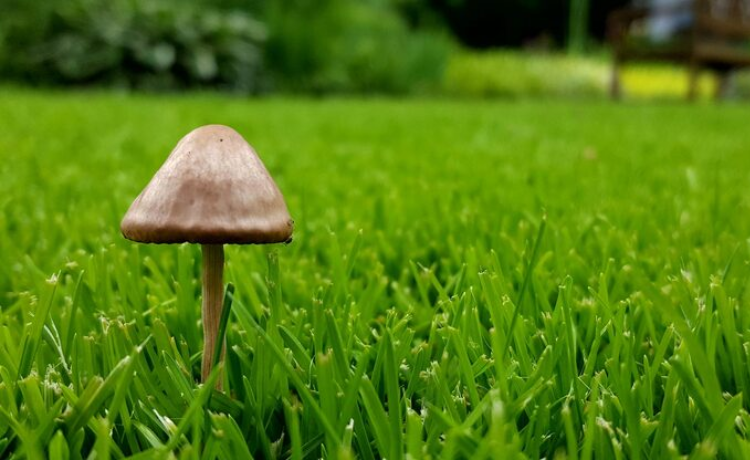
Toadstools: This is a general term for the classic umbrella-shaped mushroom with a cap and stem. Many different species fall into this category, including some that can be poisonous, like certain Amanita species.
Why Do Mushrooms Grow in Lawns?
The appearance of mushrooms is not random. Specific environmental factors trigger their growth, and understanding these can help you manage your lawn more effectively.
Factors That Encourage Mushroom Growth
Mushrooms thrive in specific conditions. If you see them in your lawn, it’s likely due to one or more of the following factors:
Excessive Moisture: Fungi need water to grow and produce mushrooms. Heavy rain, overwatering, or periods of high humidity create the perfect environment for them to fruit.
Poor Drainage: If your lawn has compacted soil or low spots where water tends to collect, the prolonged dampness will encourage fungal growth. Poor drainage keeps the soil saturated, giving mushrooms the moisture they need to appear.
Decaying Organic Matter: The primary food source for most lawn fungi is dead organic material. This can include buried wood from old construction, a decaying tree stump, thick layers of thatch, or even animal waste. As the fungus breaks down this material, it sends up mushrooms.
Shady Areas: Lawns with a lot of shade tend to stay damp longer after it rains or after you water. This reduced sunlight and lingering moisture create an ideal habitat for mushrooms to grow.
How Mushrooms Indicate Lawn Health
While they can be a nuisance, mushrooms are often a positive sign. Their presence indicates that your soil is alive and functioning as a healthy ecosystem. The fungi are actively breaking down organic matter, which is a vital process for building fertile soil.
When these decomposers do their job, they unlock nutrients that would otherwise be trapped in dead plant material. This natural nutrient cycling reduces the need for chemical fertilizers and supports robust grass growth. So, in many cases, seeing mushrooms means you have healthy, biologically active soil.
Are Lawn and Mushrooms Dangerous?
The most pressing question for many people is whether lawn mushrooms are harmful. The answer depends on the species, so caution is always advised.
Health Risks of Lawn Mushrooms
While the majority of mushrooms that appear in lawns are harmless, some can be highly toxic if ingested. This is a significant concern for households with curious toddlers or pets who might be tempted to taste one. Symptoms of mushroom poisoning can range from mild gastrointestinal upset to severe liver damage or even death.
Because it is extremely difficult for an amateur to distinguish between a safe and a poisonous mushroom, the safest rule is to assume that any unidentified mushroom is dangerous. Never eat a mushroom from your lawn unless you are an expert and 100% certain of its identification.
Identifying Poisonous Mushrooms
Certain features can be red flags for toxic mushrooms. For example, many dangerous species, like those in the Amanita family (which includes the infamous “Death Cap”), have distinct characteristics. These can include a skirt-like ring on the stem, a cup-like structure at the base (called a volva), and white gills.
However, these are not universal rules, and some toxic mushrooms look very similar to edible ones. It is not worth the risk to guess. If you are concerned about poisonous mushrooms, take a clear photo and consult a local mycological society for identification. For safety, always keep children and pets away from unidentified fungi.
How to Get Rid of Mushrooms in Your Lawn
If you’ve decided the mushrooms have to go, there are several ways to remove them and discourage their return.
Methods for Removing Mushrooms
Simply kicking or mowing over mushrooms is not an effective solution, as it can spread their spores. Instead, try these methods:
Manual Removal: The simplest method is to pick the mushrooms by hand. Wear gloves as a precaution. Pull them out of the ground, place them in a plastic bag, seal it, and dispose of it in the trash. This prevents them from releasing more spores.
Improve Drainage and Reduce Moisture: Since mushrooms love damp conditions, addressing moisture issues is key. Aerate your lawn annually to reduce soil compaction and improve water penetration. Avoid overwatering and water your lawn early in the day so the grass has time to dry before nightfall.
Fungicides: While fungicides can kill fungi, they are often not the most effective solution for lawn mushrooms. The fungal network underground is vast, and surface treatments may not reach it. Furthermore, fungicides can harm beneficial soil microorganisms. Their use is generally not recommended unless you are dealing with a lawn disease that is also causing mushroom growth.
Preventing Mushroom Growth in Lawns
Prevention is more effective than removal. To create a lawn environment that is less welcoming to mushrooms, follow these lawn maintenance tips:
Reduce Organic Debris: Regularly dethatch your lawn to remove the thick layer of dead grass that fungi feed on. Rake up leaves, grass clippings, and animal waste promptly. If you know there’s buried wood or an old stump, consider having it removed.
Increase Sunlight: Trim tree branches and prune shrubs to allow more sunlight to reach shady areas of your lawn. This will help the grass dry out faster and make the environment less hospitable for fungi.
Proper Mowing: Mow your lawn regularly at the correct height for your grass type. This promotes a healthy, dense turf that can outcompete fungi and other weeds.
The Benefits of Lawn and Mushrooms (When They’re Not Harmful)
Although they can be a concern, it’s worth remembering that mushrooms play a positive role in your lawn’s ecosystem.
Mushrooms as Soil Enhancers
Mushrooms are the champions of decomposition. By breaking down tough organic materials like wood and thatch, they release vital nutrients such as nitrogen and phosphorus into the soil. This natural process enriches the soil, improves its structure, and feeds your grass. Think of them as tiny, unpaid workers who are constantly fertilizing your lawn from below.
When Mushrooms Are a Sign of a Thriving Lawn
The presence of mushrooms is a strong indicator that your soil is alive and healthy. It means you have a functioning ecosystem with a diverse range of microorganisms working together. This ecological balance is crucial for a resilient and low-maintenance lawn. Rather than a problem, mushrooms can be seen as a sign that you are doing something right in your lawn care.
Frequently Asked Questions (FAQs)
Why do mushrooms appear after rain?
Mushrooms need a lot of moisture to fruit. Rain provides the perfect trigger, saturating the ground and signaling the underground fungal network to produce and release its spores. High humidity and damp conditions create the ideal environment for them to pop up, often seemingly overnight.
Can mushrooms damage my lawn?
The mushrooms themselves do not harm your grass. They are decomposers, feeding on dead organic matter, not living grass roots. However, their presence can indicate an underlying issue, such as compacted soil, poor drainage, or buried organic debris, which could negatively affect your lawn’s health over time.
Are all lawn and mushrooms poisonous?
No, many lawn mushrooms are harmless. However, some highly toxic species can grow in lawns, and they can be very difficult to distinguish from safe ones. Because the risk of accidental poisoning is so high, it is best to treat all unknown mushrooms as potentially dangerous and avoid eating them.
How can I safely remove mushrooms from my lawn?
To remove mushrooms safely, wear gloves to avoid direct contact. Pluck them from the base, put them in a sealed bag, and throw them in the trash. Do not compost them, as this can spread spores. If you suspect you’ve handled a toxic mushroom, wash your hands thoroughly afterward.
Should I be worried about a fairy ring?
A fairy ring fungus won’t kill your lawn, but it can affect its appearance. The fungus can create a layer in the soil that repels water, sometimes causing the grass inside the ring to die. The best approach is to aerate the area heavily and water deeply to help moisture penetrate the soil.
You would also like: “best time to water lawn“
A Balanced Approach to Lawn and Mushrooms
Seeing mushrooms in your lawn is a natural occurrence and often a sign of healthy soil. While it’s important to be cautious, especially with children and pets, you don’t always need to declare war on them. By understanding why they appear and addressing any underlying issues like poor drainage or excess thatch, you can manage their presence effectively. A well-maintained lawn is your best defense.
If you found this guide helpful, don’t forget to share your thoughts in the comments below and explore more of our lawn care tips!